What is a habesha kemis?
A habesha kemis (ሀበሻ ቀሚስ) is the traditional ankle-length Ethiopian dress, usually made from soft white handwoven cotton called shemma (ሸማ). It is known for its decorated borders: tibeb (ጥበብ) woven into the cloth on the loom, or tilf (ጥልፍ) embroidered by hand. Women wear it for church, holidays like Genna and Timket, weddings and family celebrations.
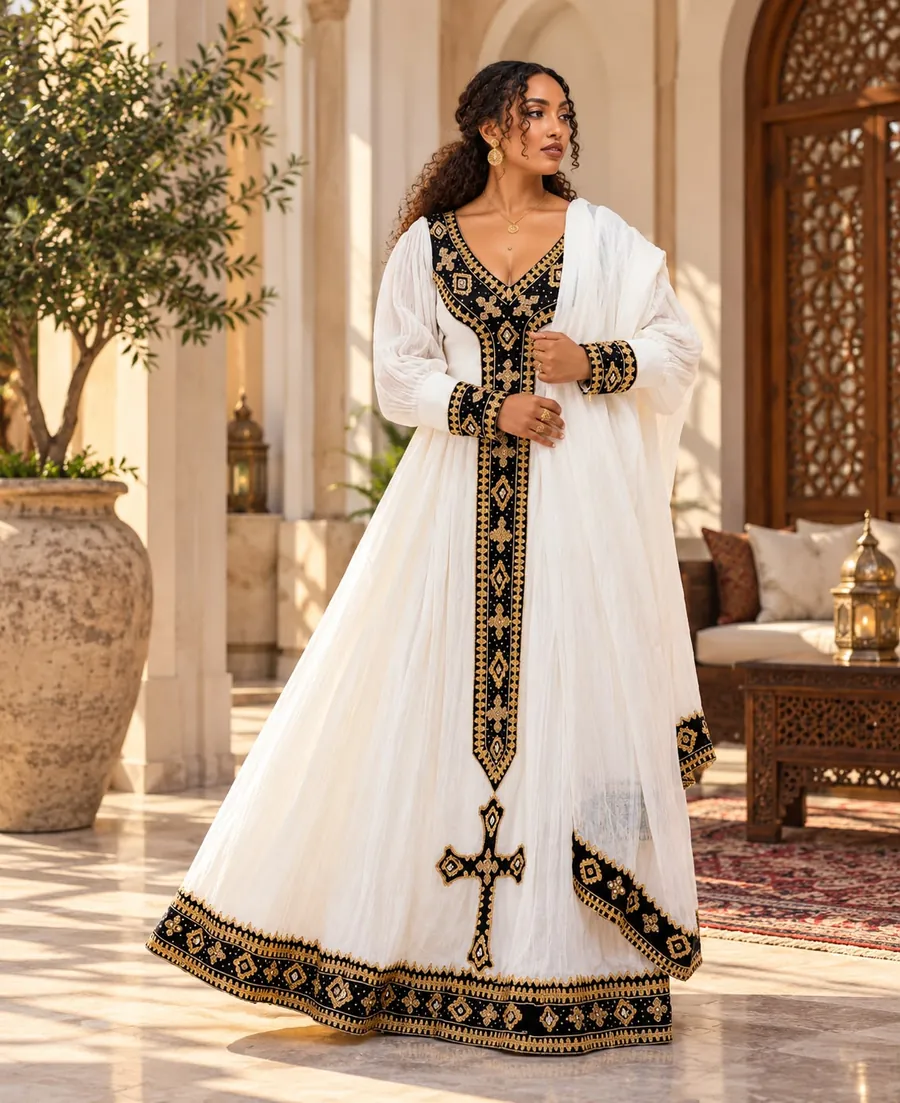
What the name means
Kemis (ቀሚስ) simply means "dress" in Amharic. "Habesha kemis" became the everyday name for the cultural dress, especially in Addis Ababa, to tell it apart from Western-style clothes. Older people may also call it yabesha libs (የሀበሻ ልብስ, habesha clothes) or bahilawi libs (cultural clothes).
Eritrean and Tigrayan women often say zuria (ዙርያ) for their own version of the traditional dress. Read zuria vs habesha kemis vs tilf for the differences.
The words to know
- Shemma (ሸማ): the handwoven cotton cloth most traditional dresses are made from.
- Tilet (ጥለት): the decorated band or border, for example at the hem, down the front or around the neckline.
- Tibeb (ጥበብ): colourful geometric patterns woven into the cloth on the loom.
- Tilf (ጥልፍ): hand embroidery added after the cloth is woven. Tilf on top of a woven border is called tilf tibeb.
- Netela (ነጠላ): a light white cotton shawl with a decorated edge, worn over the shoulders or head, especially for church.
- Shifon: a modern kemis made with chiffon or similar fabric, lighter and often more colourful.
When people wear it
Many women wear a habesha kemis to church and for the big holidays: Genna (ገና, Ethiopian Christmas, 7 January), Timket (ጥምቀት, Epiphany, 19 January in most years) and Fasika (ፋሲካ, Easter). It is also the classic outfit for weddings, engagements, graduations and cultural events in the diaspora. See what to wear for Genna, Timket or an Ethiopian wedding.
Styles you'll see today
Traditional white kemis with a coloured tibeb border are still the favourite for church. For parties and weddings, many women choose coloured gowns, tiered maxi dresses, off-shoulder cuts or matching outfits for a whole bridal party. You can see examples like Emerald Gilt (ZF-102), Bridal Party (ZF-107) and Ivory Ruby Gown (ZF-110) in our dress gallery.
Getting one made to your size
A handmade kemis fits best when it is sewn to your own measurements. With ZuriaFit you measure yourself in 6 steps, pick a style from the gallery or upload a photo, and we connect you with a maker in Ethiopia or Dubai. You pay ZuriaFit, and we coordinate the order with the maker on WhatsApp.
Frequently asked questions
Is a habesha kemis the same as a zuria?
They are closely related. "Habesha kemis" is the common Amharic name, and "zuria" is the word many Eritrean and Tigrayan women use for their traditional dress. Embroidery styles and cuts can differ by region.
What is a habesha kemis made of?
Traditionally it is made of shemma, a handwoven cotton cloth, with tibeb borders woven in on the loom or tilf embroidered by hand. Modern versions also use chiffon (shifon), satin and other fabrics.
Can I order a habesha kemis made to my measurements?
Yes. On ZuriaFit you save 6 measurements, send an order request with the style you like, and we arrange it with a maker who sews it to your size.
How long does a custom habesha kemis take?
Typical production is 1–4 weeks depending on the design, then a few business days by courier. We recommend ordering 6–8 weeks before your event.
Next steps: browse the dress gallery · how to measure · save your size profile · send an order request · group & wedding orders
Have a question? We answer on WhatsApp and coordinate with the maker for you.
Talk to ZuriaFit on WhatsAppOrder now